



Bcl-2 Family
Bcl-2 is a family of evolutionarily related proteins. These proteins govern mitochondrial outer membrane permeabilization (MOMP) and can be either pro-apoptotic (Bax, Bad, Bak and Bok among others) or anti-apoptotic (including Bcl-2 proper, Bcl-xL, and Bcl-w, among an assortment of others). There are a total of 25 genes in the Bcl-2 family known to date. Human genes encoding proteins that belong to this family include: Bak1, Bax, Bal-2, Bok, Mcl-1.
Bcl-2 Family Isoform Specific Products
-
Bcl-2 Family
(450)
View all products
-
Bcl-2
(325)
View all products
-
Bcl-xL
(123)
View all products
-
Bcl-W
(17)
View all products
-
Mcl-1
(97)
View all products
-
Bfl-1
(11)
View all products
-
Bcl-B
(6)
View all products
-
Bax
(217)
View all products
-
Bak
(14)
View all products
-
Bim
(14)
View all products
-
BNIP3
(1)
View all products
-
Bad
(10)
View all products
All Product Categories
-
Bcl-2 Family Inhibitors
(565)
View all products
-
Bcl-2 Family Agonists
(5)
View all products
-
Bcl-2 Family Antagonists
(9)
View all products
-
Bcl-2 Family Activators
(90)
View all products
-
Bcl-2 Family Modulators
(150)
View all products
-
Bcl-2 Family Inducers
(13)
View all products
-
Bcl-2 Family Degraders
(21)
View all products
-
Bcl-2 Family Controls
(2)
View all products
-
Bcl-2 Family Ligands
(9)
View all products
-
Bcl-2 Family Related Products (1042)
Related Products (1042)

-
Antibodies (31)
-
Bcl-2 Family Signaling Pathway
-
Bcl-2 Family Isoform Comparison
-
WAY-605337
 0 ImagesCat. No.: HY-128230CAS No.: 485362-61-6Synonyms: MLS-0073383WAY-605337 (MLS-0073383) is a Bcl-B inhibitor, which can be used for structural modification and optimization of scaffolds.
-
Decyl gallate
 0 ImagesCat. No.: HY-182586CAS No.: 19198-75-5Decyl gallate is an antifungal (fungal) agent. Decyl gallate downregulates the expression of the pro-apoptotic (apoptosis) protein Bak, upregulates the expression of the anti-apoptotic protein Bcl-2, and inhibits DNA damage. Decyl gallate disrupts ALG12-mediated N-glycosylation, overactivates the UPR pathway, and simultaneously reduces fungal cell wall enzyme activity, chitin levels, mitochondrial activity, budding ability, cell viability, and host cell adhesion capacity. Decyl gallate reduces inflammatory responses induced by fungal infection and disrupts fungal membrane structure. Decyl gallate can be used in studies related to paracoccidioidomycosis and invasive fungal infections.
-
Glufosfamide (Standard)
 0 ImagesCat. No.: HY-16232RCAS No.: 132682-98-5Synonyms: D 19575 (Standard); Glucosylifosfamide mustard (Standard)Glufosfamide (Standard) is the analytical standard of Glufosfamide. This product is intended for research and analytical applications. Glufosfamide is a glucose-conjugated alkylating cytotoxic agent and a derivative of Ifosfamide (HY-17419). Glufosfamide induces apoptosis frequency and increase the expression of caspase-9 and caspase-3 in cancer cells. Glufosfamide shows great anti-tumor activity in MiaPaCa-2-RFP mouse model. Glufosfamide can be used for the study of hepatocellular carcinoma, prostate cancer and pancreatic carcinoma.
-
Maritoclax (Standard)
 0 ImagesSynonyms: Marinopyrrole A (Standard)Maritoclax (Standard) is the analytical standard of Maritoclax. This product is intended for research and analytical applications. Maritoclax (Marinopyrrole A) is a novel and specific Mcl-1 inhibitor with an IC50 value of 10.1 μM, and shows >8 fold selectivity than BCL-xl (IC50 > 80 μM).
-
Longan cerebroside II
 0 ImagesCat. No.: HY-N15466CAS No.: 220873-86-9
-
Fucoxanthinol
 0 ImagesFucoxanthinol, a carotenoid, is a deacetylated Fucoxanthin (HY-N2302) metabolite with oral activity, and inhibits rat pancreatic lipase with an IC50 of 764 nM. Fucoxanthinol reduces expression of Bcl-2, Bcl-xL, survivin, XIAP, cIAP2, cyclin D1, cyclin D2, cyclin E, CDK4, CDK6, β-catenin, JunD, PPARγ, and induces GADD45α expression. Fucoxanthinol activates caspase-3, caspase-8, caspase-9, Nrf2/Keap1/ARE pathway, and inhibits activation of Akt, NF-κB, AP-1, PDPK1, GSK3β phosphorylation. Fucoxanthinol induces apoptosis, G0/G1 cell cycle arrest, inhibits cancer cell viability, proliferation, migration, invasiveness, tumour growth, adipocyte differentiation, oxidative stress, neurotoxicity, triglyceride absorption, angiogenesis, and obesity-induced inflammation. Fucoxanthinol can be used for the research of osteosarcoma, leukemia, lymphoma, adult T-cell leukemia, prostate cancer, colon cancer, breast cancer, hypertriglyceridaemia, Alzheimer’s disease, Parkinson’s disease, obesity, insulin resistance, malignant melanoma, and type II diabetes.
-
FX1 (Standard)
 0 ImagesCat. No.: HY-102027RCAS No.: 1426138-42-2
-
Sphingosine
 0 ImagesCat. No.: HY-165550CAS No.: 134053-67-1Synonyms: C22-D-erythro-SphingosineSphingosine (C22-D-erythro-Sphingosine) is a metabolite of sphingolipid and a pro-Apoptotic signaling messenger. Sphingosine induces apoptosis via Caspase-dependent, mitochondria-dependent and lysosomal affinity detergent pathways, downregulates Bcl-2 and Bcl-xL, and truncates Bid and Bax. Sphingosine is used for cancer research.
-
(Rac)-BDA-366
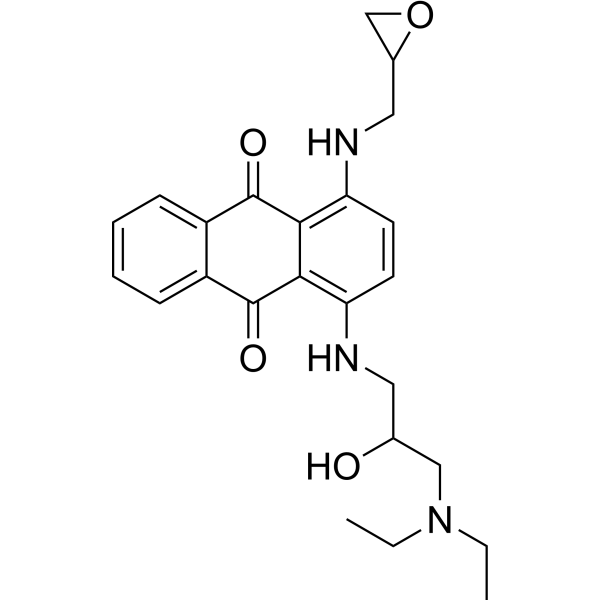 0 ImagesCat. No.: HY-101083ACAS No.: 142645-19-0(Rac)-BDA-366 (example 2) is the despinner of BDA-366 (HY-101083). BDA-366 is a potent Bcl-2 antagonist (Ki=3.3 nM), binding Bcl-2-BH4 domain with high affinity and selectivity. BDA-366 induces conformational change in Bcl-2 that abrogates its antiapoptotic function, converting it from a survival molecule to a cell death inducer. BDA-366 suppresses growth of lung cancer cells.
-
Benzylurea (Standard)
 0 ImagesCat. No.: HY-W010253RCAS No.: 538-32-9Benzylurea (Standard) is the analytical standard of Benzylurea (HY-W010253). This product is intended for research and analytical applications. Benzylurea is a benzylamide. Benzylurea is an anti-inflammatory agent. Benzylurea inhibits LPS (HY-D1056)-induced upregulation of MTCH2 expression and regulates pathways associated with mitochondrial function, inflammation and cell survival. Benzylurea alleviates LPS-induced proliferation inhibition and apoptosis of periodontal ligament fibroblasts, as well as the release of proinflammatory cytokines. Benzylurea can be used in studies related to periodontitis.
-
BDE30671203
 0 ImagesCat. No.: HY-181030BDE30671203 is a highly selective PLK1 inhibitor (IC50 = 2.163 nM). BDE30671203 induces G2/M phase arrest and Apoptosis. BDE30671203 downregulates key cell cycle regulators (CDC20, CDK1) and the anti-apoptotic gene Bcl-2. BDE30671203 exhibits anticancer activity against non-small cell lung cancer, large cell lung cancer, and liver cancer.
-
Amsacrine isethionate
 0 ImagesCat. No.: HY-13551CCAS No.: 80277-14-1Synonyms: m-AMSA isethionate; Acridinyl anisidide isethionateAmsacrine isethionate (m-AMSA isethionate) is a Topoisomerase II inhibitor. Amsacrine isethionate intercalates into DNA. Amsacrine isethionate induces Ca2+-mediated inactivation of ERK, and also downregulates AKT, promoting MCL1 downregulation mediated by GSK3β via reducing the phosphorylation level of GSK3β. Amsacrine isethionate induces Apoptosis by activating Caspase-9 and Caspase-3. Amsacrine isethionate blocks HERG potassium channels in the open/inactivated state. Amsacrine isethionate induces chromosomal aberrations and sister chromatid exchanges, and inhibits the synthesis of RNA and DNA. Amsacrine isethionate exhibits anti-leukemic activity. Amsacrine isethionate causes cardiac repolarization disorders, QT interval prolongation, ventricular arrhythmias, and increases the risk of sudden cardiac death. Amsacrine isethionate can be used in research related to acute myeloid leukemia, lymphoma and progressive malignancies.
-
Triptophenolide (Standard)
 0 ImagesCat. No.: HY-N0475RCAS No.: 74285-86-2Synonyms: Hypolide (Standard); (+)-Triptophenolide (Standard)Triptophenolide (Standard) (Hypolide) is the analytical standard of Triptophenolide (HY-N0475). This product is intended for research and analytical applications. Triptophenolide is a colorless crystal isolated from the ethyl acetate extract of Tripterygium wilfordii. Triptophenolide is an orally active pan‑antagonist of the androgen receptor (AR) with an IC50 of 467 nM against human wild‑type AR. Triptophenolide reduces AR expression, inhibits AR nuclear translocation, downregulates prostate‑specific antigen mRNA levels, and suppresses the growth of AR‑positive prostate cancer cells. Triptophenolide shows anti-tumor effects against breast cancer by inhibiting cell proliferation and migration, inducing G1-phase arrest and apoptosis, repressing xenograft tumor growth. Triptophenolide inhibits pyroptosis, alleviates tissue inflammation, and ameliorates synovial injury. Triptophenolide can be used for the study of prostate cancer, rheumatoid arthritis and breast cancer.

-
Chlorphoxim
 0 ImagesCat. No.: HY-W747601CAS No.: 14816-20-7Chlorphoxim is a broad-spectrum and highly efficient insecticide. Chlorphoxim kills pests by inhibiting AChE. Chlorphoxim inhibits the activities of SOD and CAT in zebrafish embryos. Chlorphoxim induces oxidative stress in zebrafish embryos by activating ROS. Chlorphoxim induces apoptosis by upregulating the expression levels of Bax, Bcl2 and p53 in zebrafish embryos. Chlorphoxim exhibits neurotoxicity and developmental toxicity. Chlorphoxim is used in agricultural research for the control of various pests.
-
Lonafarnib (Standard)
 0 ImagesSynonyms: Sch66336 (Standard)Lonafarnib (Standard) (Sch66336 (Standard)) is the analytical standard of Lonafarnib (HY-15136). This product is intended for research and analytical applications. Lonafarnib (Sch66336) is an orally active, blood-brain barrier penetrant farnesyltransferase (FPTase) inhibitor. Lonafarnib increases the phosphorylation levels of Akt, CaMKII and CREB, upregulates BDNF expression in the hippocampus, elevates the content of α7nAChR on cell membranes, and blocks the isoprenylation of H-Ras. Lonafarnib repairs synapses and reverses spatial memory deficits in Aβ1-42 model mice. Lonafarnib inhibits RSV fusion and replication, and alleviates virus-induced lung injury. Lonafarnib activates the lysosomal and autophagic pathways, and reduces the phosphorylation and aggregation of tau. Lonafarnib acts synergistically with Sorafenib (HY-10201) to promote apoptosis, and inhibits the proliferation and invasion of melanoma cells. Lonafarnib inhibits the farnesylation of progerin, repairs nuclear membrane defects, and activates the cGAS-STING-STAT1 signaling pathway. Lonafarnib can be used in research related to diseases including Alzheimer's disease, viral infections, melanoma, and progeria.
-
ML311 (Standard)
 0 ImagesCat. No.: HY-101778RCAS No.: 315698-17-0Synonyms: EU-5346 (Standard)
-
G4232
 0 ImagesCat. No.: HY-118874HG4232 is an immune-silent BCL2 antisense oligonucleotide that binds to BCL2 mRNA to induce target degradation and inhibit Bcl-2 protein translation. G4232 carries 5'-methylcytosine in its two CpG motifs, which eliminates CpG-mediated immunostimulatory activity and does not cause significant splenomegaly or elevated plasma IL-12 levels in SCID mice. G4232 induces Apoptosis. G4232 inhibits tumor growth in a melanoma xenograft model. G4232 can be used in studies of melanoma and prostate cancer.
-
MK256
 0 ImagesCat. No.: HY-183423CAS No.: 2271348-04-8MK256 is an orally active, selective CDK8 inhibitor and CDK19/cyclin C inhibitor with IC50 values of 2.5 nM and 3.3 nM, respectively. MK256 downregulates phosphorylated STAT1 (S727), STAT5 (S726), MCL-1 mRNA and CCL2 mRNA. MK256 exhibits anti-tumor activity in acute myeloid leukemia. MK256 can be used for the research of acute myeloid leukemia.
-
Bax agonist 1
 0 ImagesCat. No.: HY-119682CAS No.: 18304-79-5Bax agonist 1 (compound SMBA2) is a Bax agonist (Ki=57.2 nM). Bax agonist 1 induces Bax conformational changes by blocking S184 phosphorylation, promoting Bax insertion into the mitochondrial membrane and forming Bax oligomers, which induce cytochrome c release and apoptosis in malignant cancer cells expressing Bax. Bax agonist 1 can be used in lung cancer research.




